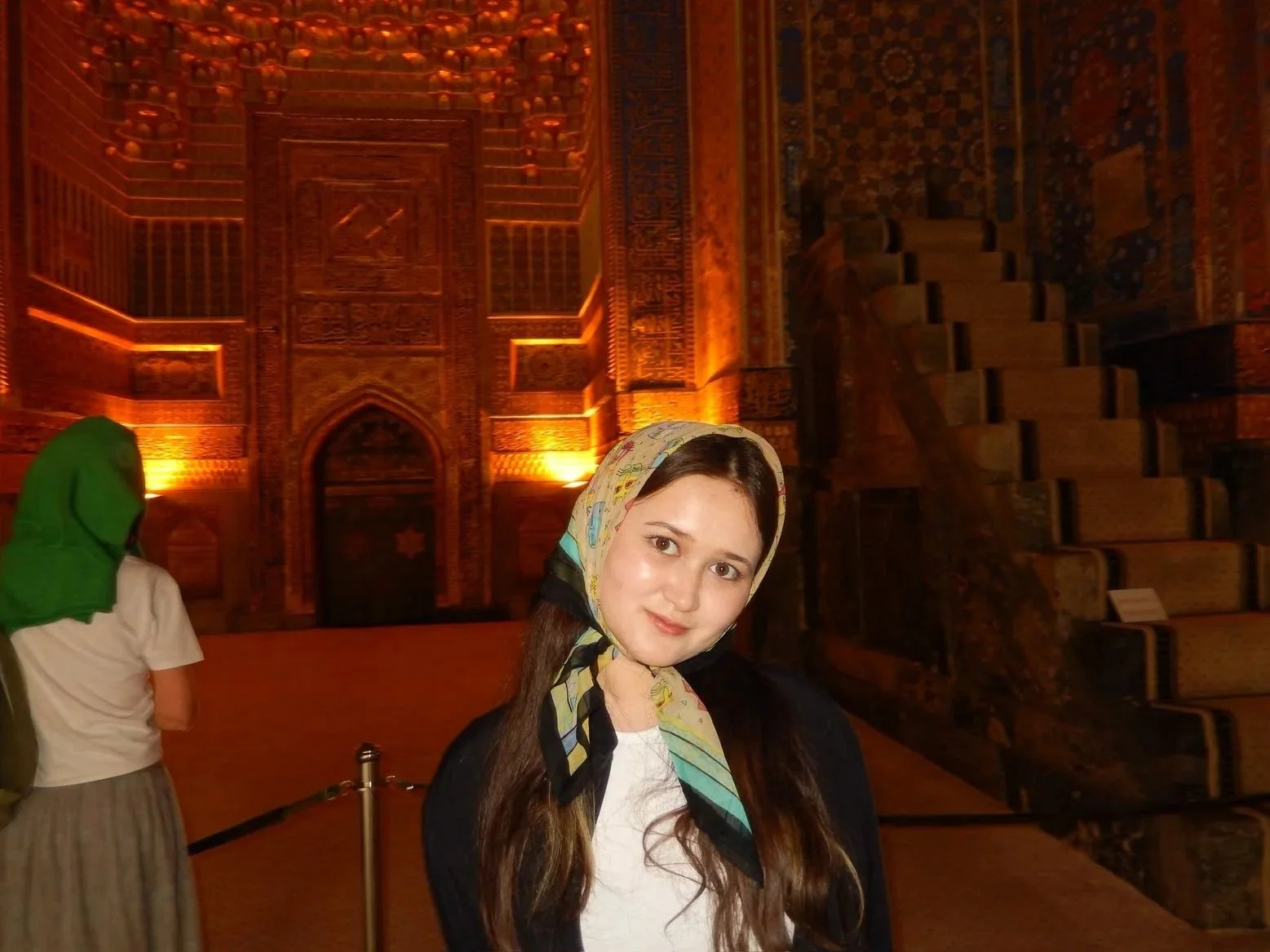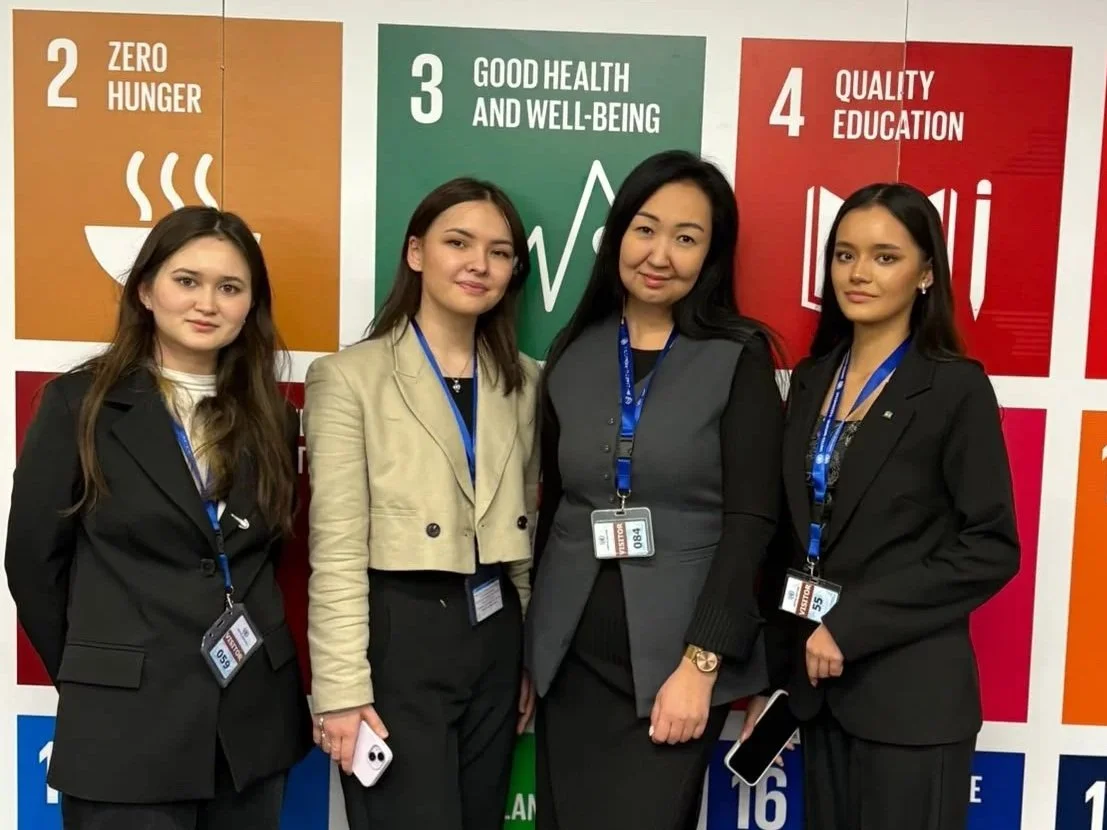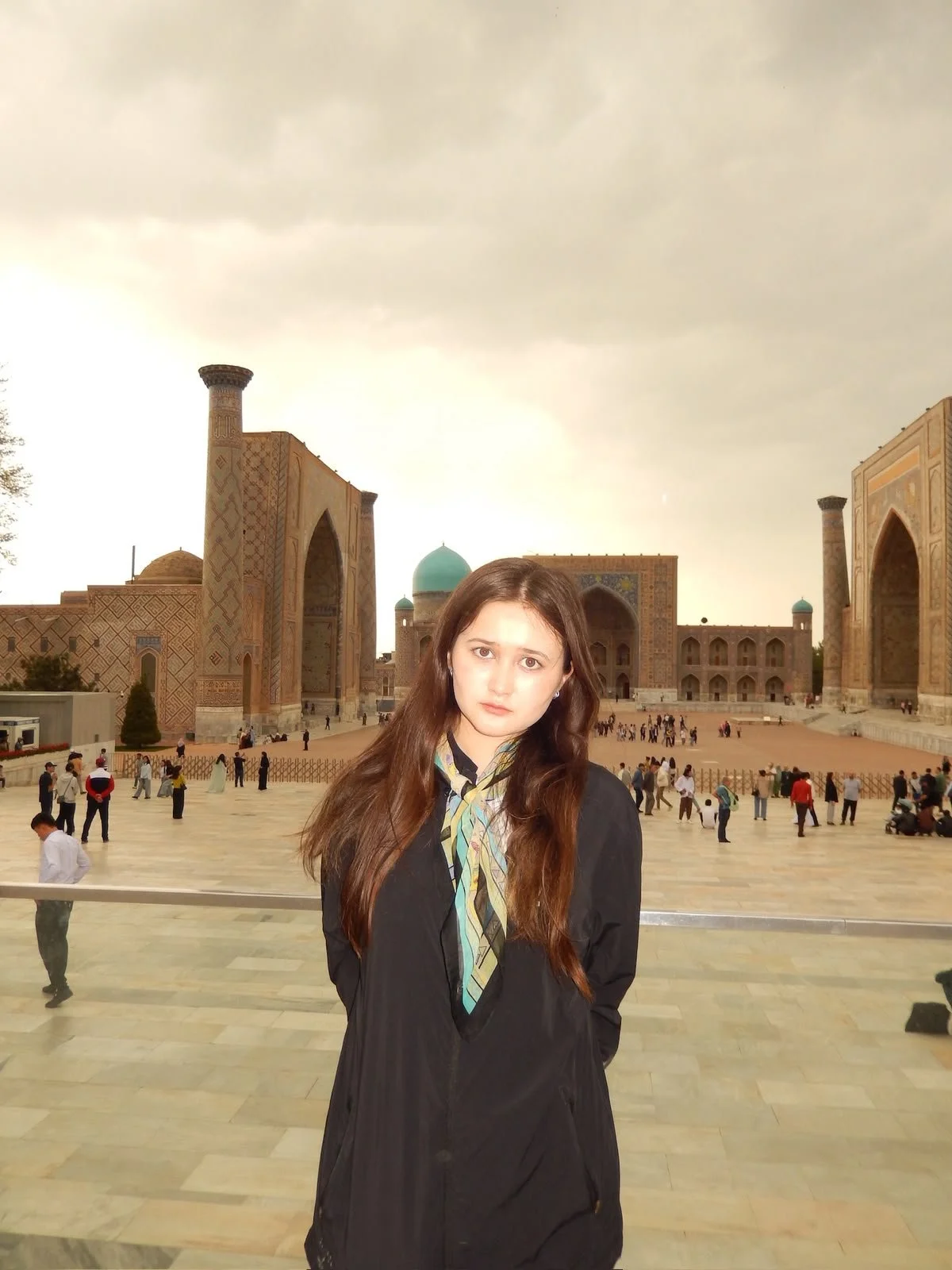
Aizura Anteeva
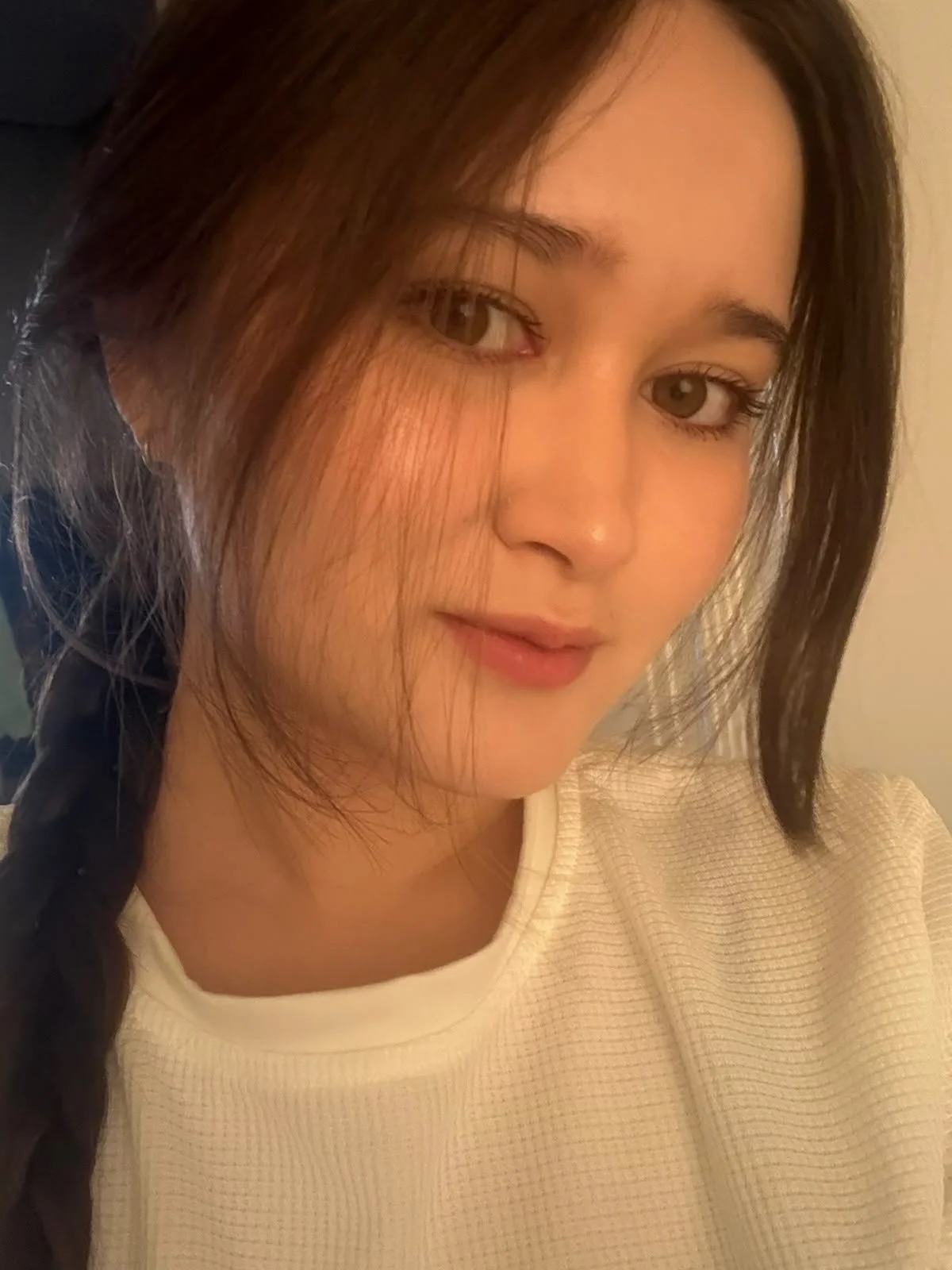
Anteeva Aizura Bakhadirovna
Assistant Resident Director for American Councils RLASP, Kazakhstan
Student in the International Relations Faculty at Al-Farabi Kazakh National University
Aizura’s Story:
Aizura is a 20 year old college student studying International Relations at Al-Farabi KazNU. She lives with her parents, a younger brother, and a younger sister. She is a self-proclaimed feminist who has worked with American study abroad students through American Councils as both a language partner and an Assistant Resident Director. She is ethnically Uyghur and was born and raised in Kazakhstan.
Gender Equality
-
First of all, I would like to point out that women in Kazakhstan might not be as free as in countries of the West or Europe. But I think that compared to other Asian countries, we are very equal in our rights relative to men, setting aside some everyday inequality where there is patriarchy in the family and the man decides everything.
However, it should be noted that I come from a relatively privileged family, because my family has the financial standing that allows me not to depend on other men or other people in general. Also, my father is an educated man, so it is the case that I don't always have to rely on a man's opinion. I have my own opinion, which cannot be said for most other women. In some cases, women might lack the financial means to gain some independence from their parents, particularly a father who controls their life. Some might simply not have the funds to get a higher education or an education in general to realize how vulnerable of a position they are in.
There are a few small moments, but most of the time, I personally have never encountered any direct oppression. Because, first of all, I have the opportunity to go to better places where people won't treat me badly. I also have a very educated social circle where everyone has a higher education, and everyone understands what women's rights are. None of them treat women the way people of the older generation do. Yet despite all of this, I believe both my mom and many of my friends have had experiences where they weren't hired solely because they were women, and employers preferred a man, and only considered men, because of stereotypes that a man will do the job better.
-
In Kazakhstan, we have the concept of uyat, which really interferes with everyday life; uyat is like shame. It's like if you do something wrong and it gets strongly condemned by the whole society. Most often, the concept of uyat applies specifically to young women.
Kazakhstan is a conservative country where there are still very outdated views on many things. A girl might not be able to fully express herself, be herself, or show her identity. For example, it's hard to be outside wearing clothes that you feel comfortable in. If you go out in a skirt or in some kind of revealing top, people might look at you disapprovingly or reprimand you.
I have gone out myself more than once in something not necessarily revealing, but if your arms are bare, that's already seen as, “What is she doing?” More than once, grandmas—mostly it's grandmas or old folks—would say things like, “Dear, that's very bad. Why are you dressed like that? Do you not have parents?” Things like that.
I think this very concept ties women down, because such a concept does not apply to men. Most of the time, it's very hard to tell a man that he is at fault for something. All the shame falls on the woman.
Family
-
In Kazakhstan, in 90% of all families, the man is in charge, and the girl or woman follows his lead. Usually, it's a husband and wife. And in my family, my dad still held a higher position than my mom in the family hierarchy. Despite this, my mom could openly argue with my dad, she could make certain moves without clearing them with him. I can't say that my mother had less freedom than my father.
I think my siblings and I perceived both our mother and father as equally authoritative. It's not like my father has higher authority over me than my mom. I think that both parents in my family are equal, because both my mom and dad make an equal contribution to the family. My mom works, so she provides for the family financially. Dad works too, so he also provides for the family financially. I don't think there's any sense that my mom is somehow slightly lower.
But it does happen that my dad might, for example, make certain remarks just because he was raised that way and he doesn't see the problem with it. For example, he might say, “I'm the man, I make more money than you, so you should be looking after the children more.” Even though both my mom and dad work the same amount of time.
-
I think my mom is a very, very strong woman. There were three children in her family and my mom was the middle child. First, there was my aunt, the eldest daughter, then my mom, and the younger brother. The eldest daughter, my aunt, was always favored the most by my grandfather. He insisted that she go to university and get an education. In the end, she got in and she was enrolled up to her final year, but she did not get her diploma.
My mom always wanted to get a higher education, she always wanted to study, but she was told, "No, you will not study, we will spend the money for your education on the only son,” (on my uncle). They wanted the only son in the family to get a higher education, so that he would study instead of my mom. That is how it was.
That is why my mom never had the opportunity to get an education, to study what she wants. She still dreams of getting a higher education someday. That is why she plans to wrap up all her work in five to six years and then go to university, because she does not feel like a full-fledged member of society without a higher education.
-
As for me personally, my mom was always very supportive, and she was always in favor of me studying and developing. She always provided any money needed for my educational courses and for my university education. She couldn't see any universe where I wouldn't be educated.
The same goes for my father. He went to university himself, he has two degrees, and he always wanted me to get a higher education so that I would be an educated girl whom no man could ever surpass financially or emotionally just because he's a man. He always said that “My daughters are no worse than men.” That's how it was.
My father has four brothers, and two of them already had sons. For all of them, the first child was a son; my father's first child was me. When I was born, they all started saying, “You're very unlucky that your first child isn't a son, that you have a daughter.” But my dad fought with everyone, and he said, “My daughter will be better than all your sons.” To him, it made no difference whether his child was a man or a woman.
Religion
-
I don't believe in God. I'm not a religious person at all. Religion doesn't affect my life in any way. Except that sometimes I might go to a mosque or church with friends just to spend time together. I don't observe any religious rites, I don't wear a hijab, and so on.
But my family is religious. Though I think it's different from the American concept of religiosity. Because if someone in America is religious, they might go to church on Sundays, celebrate Easter or Christmas, and so on. We don't have that. In my family, it's Islam. But it's not that kind of Islam; for instance, no one in my family wears a hijab, no one in my family goes to a mosque, or prays.
My mom thinks that the most important thing is to be a good person and believe in God, and that's it. Usually she doesn't express it in any way or impose it on anyone. My dad believes in God, but he doesn't say that he is a Muslim or a Christian or part of another religion. He just says that he knows there is a God, that the most important thing is you should be a good person and believe in God. Religions were made up by people, so he sees no point in choosing any specific one when in fact, to him, they are all slightly similar.
-
I think this is a very controversial point, and perhaps I'll be a little biased. Once again, I'll judge by my circle and by the average person in Kazakhstan. I think that to some extent, it's not so much that there are more religious young people than in the older generation, but I think there are more radical Islamists specifically among the younger generation. There is very strong propaganda from, say, Middle Eastern media, from certain religious institutions.
For instance, my school was located next to a mosque, and sometimes people from the mosque would visit us and give us lectures. They would tell me, “You're a girl. You have a demon inside you, you're possessed, and that's why you're not a Muslim. In time, when this passes, when the demon leaves you, you will come to Islam, and you will become a good person. Right now, though, you're a bad person.” This was done to me especially often because I wasn't religious. These things were said to me when I was in school, when I was 14–15 years old. Thank God, though, I was never really the kind of person who is easily influenced. So I just thought, “What nonsense,” and forgot about it.
Still, among my generation, there are very many people who wear the hijab. When I go out on the street, most often it's young girls or very, very old women.
Culture
-
I think that, first and foremost, Uyghur and Kazakh cultures are very similar. I think that to some extent they are identical, aside from certain traditional aspects, like rituals and so on. I believe that especially in Kazakhstan, expectations and certain traditional aspects exist not only for Kazakh women, but are tied to women in general. Whether you are Kazakh, Uyghur, Russian, or American, the expectations for you will be the same.
I believe the main one is that you have to be calm, you have to be very kind to all people. But I think similar expectations also exist in other countries, like in Europe, the West, and so on. Just because you're a woman, more emotional labor is expected of you. Specifically, you have to constantly smile, you must always be very polite, and so on.
In my case, I've just always been very lucky with people. I have always been surrounded by people who don't do things like expecting something from a woman just because she's a woman. So I haven't had any direct confrontations where I had problems because certain expectations.
But then again, I don't think I can speak for all women in Kazakhstan, because so many of my friends have experienced this. They often have a lot of additional responsibilities just because they are women. My friend worked as a manager at an educational center, and she had a male colleague who was also 21, just like her. They had the same position, and they earned the same salary, but my friend had more responsibilities. They said that whenever clients came, she had to greet them because she's a girl, she's prettier, and she smiles more. Therefore, it would be easier to work with clients with her, and they would feel more comfortable with her. I think there are plenty of instances like that.
But again I think this is not specific to Kazakhstan, but rather to the world as a whole. No matter how progressive a country is, I think certain patriarchal foundations still remain in every country.
-
I consider myself a feminist. I think that, to some extent, discovering feminism when I was a teenager made me who I am today. Before that I didn't even realize what a privileged position I was in, not just financially, but simply because I was born in Kazakhstan.
Of course, we still have room to grow, we have room to develop ourselves and our freedom. But, compared to other girls, say, from extremely radical Islamic countries, or from Asian countries where patriarchy is at its peak, every day I am very grateful that I can get an education, that I can speak other languages freely, that I can speak out and express my opinion, and that I can work in the government.
That is why I consider myself a feminist. I would like to be one of those women who inspire other young girls to achieve more. I think that is very important. I believe that women deserve so much more. And all of my friends also consider themselves feminists, because again, all of my friends are educated girls, and they all know that studying at university is already a privilege created by the hands of women; that if women hadn't created this wave of feminism back in the day, we would still be stuck at home, just giving birth to children and serving men.
It's also worth mentioning that, in principle, my family was like that. Even when I was little, when I didn't know what feminism was, I never had a moment where I didn't want to study, or where I didn't understand something. I never had the mindset that a man is better, cooler, or smarter than me, because my dad never put that idea into my head.
Also, there is one son in my family; usually in Kazakhstan or in Central Asian countries, if there are many girls and one son, that son is very privileged, everyone adores him, and so on. But in my family, that was not the case. So I think that my upbringing and my family greatly influenced the kind of person I am today. In the sense that I openly support feminism, I have never been ashamed of it.
But in Kazakhstan, there was a time when feminism and feminists were heavily shamed with claims like, “What are you even fighting for, we already have equality,” and so on. It even happened that guys at school tried to bully girls who were feminists, saying, “You are just acting like pseudo-intellectuals, you know nothing about feminism, and you only call yourselves feminists because it is supposedly trendy,” which was absolutely not true. Luckily, I have a sharp tongue too, and I could always quickly fire back at people who talked to me like that, because I never felt like I couldn't argue with men. Meanwhile, other friends of mine, when they were openly bullied or openly hit, they couldn't say anything back because they had backwards thinking that they couldn't argue with a man.
-
I can talk about the situations and traditions in Central Asia that I don't like. For instance, in the Caucasian regions there is such a concept as honor killings. It is when a girl brings shame on your family, and you kill her. Most often, she is killed by her father or brother.
I read a news story about this, it was relatively recent. A girl from a Muslim family fell in love with a Christian, and they ran away to Georgia together. Her cousin tracked her down there, and he raped her and then killed her. He presented it as an honor killing because she had supposedly brought shame upon her family, and because of that, she deserved to be killed to wash away this shame. It's the same in Kyrgyzstan and Kazakhstan.
But in Kyrgyzstan, ala kachuu is much more common. Ala kachuu is when you kidnap a girl to take her as your wife. Most often in Kyrgyzstan, this is accompanied by rape and sexual violence. A girl will be kidnapped, then she is raped so that she cannot return home due to the shame. They tell her, "You've already lost your purity, so you have to stay here, in our family." Sometimes her parents themselves might say, "Well, that’s it. You're not a virgin anymore, and you're damaged goods." They often say "poor-quality goods," or "defective goods." This means that you're now a defective product.
Definitions and Cultural Context
-
'Ұят’ or ‘Уят’
Uyat, or shame, is cultural tradition of Central Asia. It is used to regulate individuals’ behavior through group and familial shaming, and it overall encourages individuals to conform to dominant social norms.
To learn more about Uyat, check out this video panel!
-
Uyghurs an ethnically Turkic people that have lived in Central Asia for thousands of years. They practice Sunni Islam, which is seen as an integral part of their cultural identity. While there are Uyghur groups living in many current Central Asian Republics, there is also a designated Xinjiang Uyghur Autonomous Region in western China. The Chinese government has committed genocide and crimes against humanity on the Uyghur population in China since 2017.
To take action and help the Uyghur population in China, visit the Uyghur Human Rights Project.
-
Ala Kachuu, or bride abduction, is a marriage tradition found in Central Asia, particularly in Kyrgyzstan. It involves intra-community coercive marriage where a prospective groom, often with the help of his friends or even the prospective bride’s family members, will abduct a woman and take her to his home. Once there, the groom’s family members will attempt to persuade the bride into consenting to the marriage by donning a white scarf. Once she has consented, the groom’s family will send a party back to the bride’s family with an apology and announcement of the marriage.
To find out more about ala kachuu, click here.